

The Dial Turns Both Ways
Apple launched the iPod in 2001, retired it in 2022, and now it's coming back.
Apple launched the iPod in 2001, retired it in 2022, and now it's coming back.
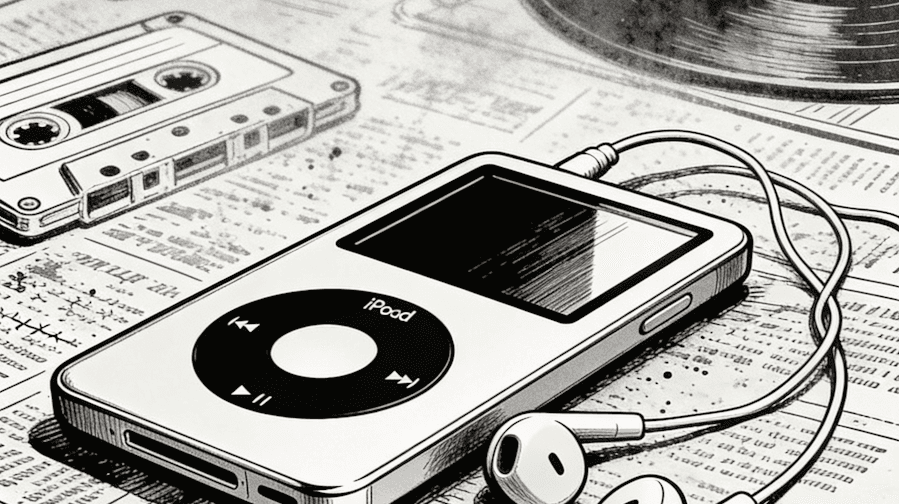
There is a kind of loneliness only music could fix, and the Apple iPod has played its part in helping us sailing through those days.
For many, It has been a companion on the walk home on cold January evenings, and the midnight strolls on the streets.
On a slow Sunday afternoon, you put the headphones in and the world went quiet. For as long as the battery lasted, it was yours again.
That was the iPod. That was all it was, and it was enough.
Apple launched it in 2001, small enough for a pocket and big enough for your whole taste in music. In 2022, the company discontinued it, after more than 450 million sold. We had moved on without really noticing.
Now it's back, and not for those of us who spent whole Sunday afternoons deciding which forty songs made the cut. It's back for Gen Z. According to an Associated Press report, searches for old iPods like the Classic and the Nano have climbed, and secondhand ones now sell for hundreds of dollars in some cases.
They're hunting for them on purpose, and partly for the looks: the chunky body, the chrome back, the click wheel photographed on a café table like a prop from a film about a simpler life. I get it. It photographs well. I'm just not sure it feels the same.
Because what the iPod really gave us, without meaning to, was one thing at a time. You pressed play and you listened to music without being distracted from notifications. The song was the whole world for three and a half minutes and we didn't call it mindfulness or a digital detox.
I think that's what Gen Z is after underneath the aesthetics: a device that does one thing.
They're trying to buy their way out, which is very Gen Z of them, and I can't blame them. I just feel a mix of recognition and small private grief watching it happen, because what they've turned into a mood board was, for some of us, simply how we got through the commute, and life in general.
Somewhere in a drawer I haven't opened in years is my silver iPod nano, scratched along one edge from the day I dropped it on the floor. The music on it is from 2009, songs I picked carefully back then.
I wonder if the battery would still hold, and whether the songs would feel like a time capsule or a homecoming.
Part of me wants to find out. But what made it matter had nothing to do with how it looked on a shelf. It had to do with who I was when I carried it: younger, less scattered, able to give one song my full attention without the rest of my life leaking in.
That's what we're all reaching for, I think, the listening. And that's the one thing no platform sells.