

Reading Like It's 1995: One Month Without Hyperlinks
The hyperlink revolutionised how we access information, but it also fractured how we think.
The hyperlink revolutionised how we access information, but it also fractured how we think.
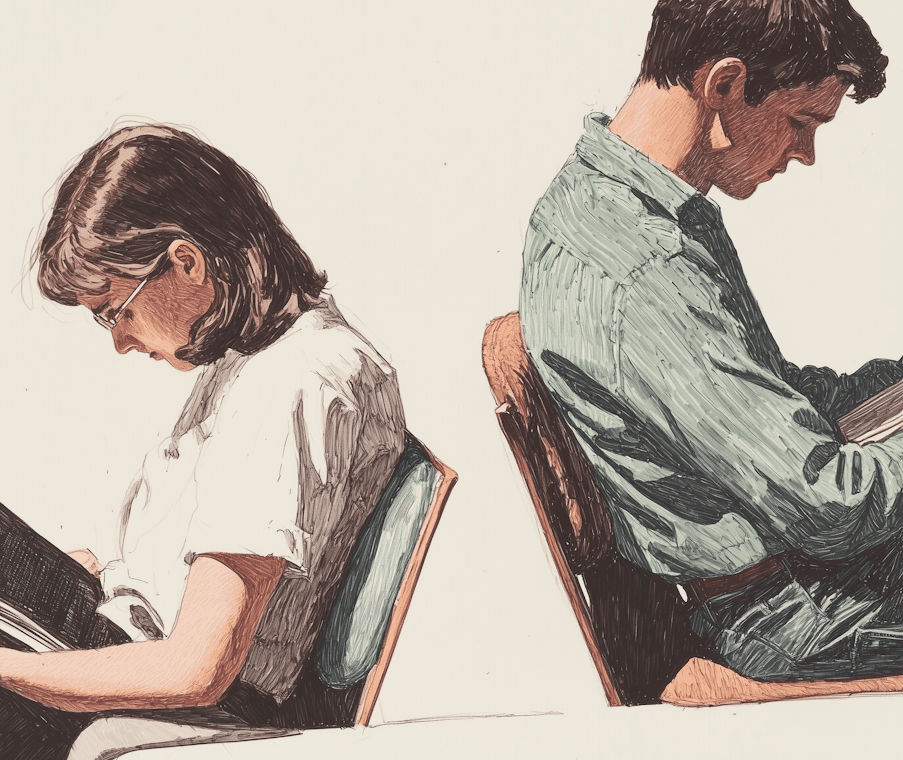
I printed seven articles on a Tuesday evening and didn't really know why.
It wasn't a plan. It was more like a small, quiet act of resistance, the kind you do when you've been pushed to an edge you can't quite name.
I'd spent the better part of that week reading in the way you read things now: three paragraphs in, a link, another link, a sidebar about something I didn't ask for, an ad that knew too much about me, a notification, another tab, another tab, and then the strange vertigo of having seventeen things open and no memory of where I began or what I had wanted to know in the first place.
I printed the articles and stacked them on my desk. Black text, white paper, no blue underlines coiled inside sentences like tiny escape hatches. They looked almost old-fashioned. They looked, honestly, like something you were supposed to sit with.
I won't pretend it became a beautiful habit. I didn't transform into someone who reads three books a week and wakes up early with chamomile tea. I barely read during that month, if I'm honest. Some evenings I just sat near the stack and didn't touch it.
Some nights I picked up one printed page and read the same paragraph four times before setting it down. The urge to reach for my phone was so automatic it frightened me a little. My thumb would move before my brain had even made a decision.
But something else was happening underneath all of that.
I started keeping a small notebook nearby. When an article mentioned something I didn't know, I wrote it down instead of disappearing into a search. When a sentence landed in a way I liked, I underlined it with an actual pen and felt oddly satisfied.
I wrote my own little notes in the margins, half-formed thoughts, questions, small arguments with the writer. It was slow. It was sometimes frustrating. It felt, in a way I hadn't expected, like being present somewhere.
The printed pages asked something of me that screens no longer do. They asked me to stay. They couldn't refresh themselves or autofill my silences with content. They just waited, the way patient things wait.
I also returned to a few books I'd been meaning to read for years, the kind that had sat on my shelf long enough to become furniture. I didn't finish all of them. I finished one and felt disproportionately proud.
Somewhere in the middle of it I realised I'd gone a full hour without checking my phone, not because I was disciplined, but because I'd simply forgotten it was there.
That felt like something worth noting.
I'm back online now, obviously. The tabs are open. The links are there, threaded through every sentence like an invitation I'm not sure I accepted.
But I read a little differently now. I catch myself pausing before I click, asking whether I actually want to go somewhere else or whether I was just offered an exit and took it out of habit.
Most of the time, I'm still learning the difference.
But on my desk there is still a notebook with half-finished thoughts and underlined sentences and questions I wrote to no one in particular. I look at it sometimes. It feels more mine than almost anything else on that desk, which is strange, given that it's just paper.
Or maybe it's not strange at all.